
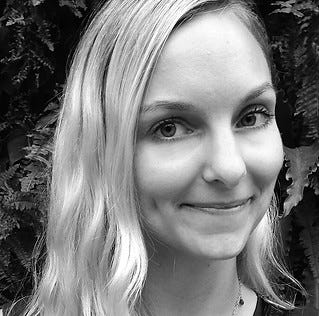
Today, I’m delighted to host a Q&A with Fawn Brokaw Doyle, author of Salt People of the Cloud Houses. Thank you Fawn for answering some of my burning questions!
Salt People of the Cloud Houses tells the story of Sarah Rapalje, the first European child born in New Netherland (later New York). The narrative follows her coming of age as she navigates love, loss, and the perils of a frontier life. Amidst war and shifting allegiances, Sarah must determine who is the real threat to her family's survival—the Native Americans, the English, or the Dutch West India Company? The book explores her struggle to protect her family and the sacrifices she must make.
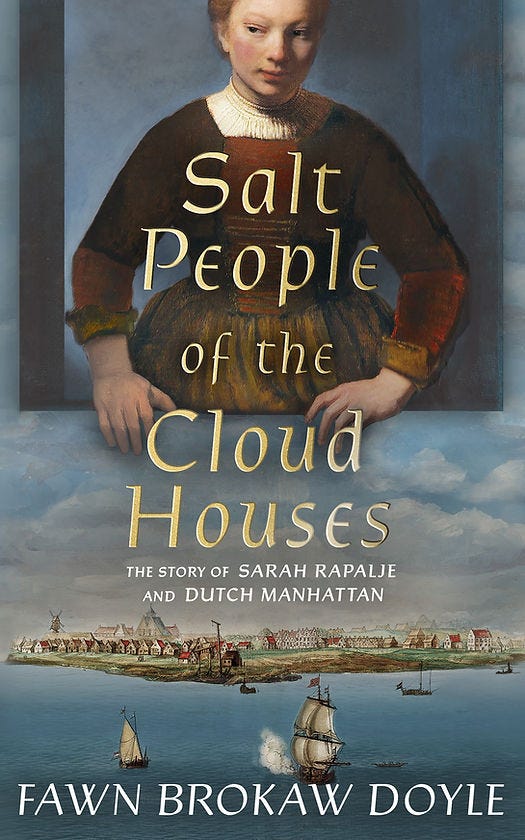
Salt People of the Cloud Houses is an immersive and inspiring story, based on the author’s 8th great-grandmother.
Sarah is a fierce, resilient and tactical woman as she marries twice and has sixteen children. Her love for her family and protectiveness define her character. She’s also supported by a varied group of friends and family, who become fundamental to her story.
Fawn has dug deep into this period to recreate it vividly, from the complex political relationships and friendships between the settlers and the Native Americans to everyday life and traditional food and celebrations. The attention to detail shone through in this novel, recreating a tangible 17th-century New Netherland world. I loved Fawn’s description of some of the traditional foods they ate, as well as the traditions and the focus on domestic life, which added a genuine and grounded layer.
I wanted to find out more about Sarah and how Fawn went about recreating Sarah’s story.
Q&A
Can you tell us a bit about yourself and how you got into writing historical fiction?
As a lifelong history nerd, I've always loved historical fiction. I read widely across time periods and places as a gateway to learning more. I especially love to learn about lesser-known history or from under-represented points of view. My mother and teachers encouraged my writing from a young age.
I started college majoring in journalism, but I switched to visual arts halfway through and have had a happy career in design for the past 10+ years. After having my son in 2021, I felt like I needed an outlet outside of my day job and mothering, so I dove into writing historical fiction.
How did you first discover Sarah’s story and what made you want to tell it?
I began researching my genealogy in 2017 when I was getting married and wondering if I should keep my last name (Brokaw). In this lineage, I found that I was related to the very first settlers of NY state, when it was the Dutch colony of New Netherland. My 8th great-grandmother, Sarah Rapalje, is noted as the firstborn daughter of the colony, born in 1625. This was the first time I heard that NY started as a Dutch colony!
I wanted to know more about what Sarah's life had been like and the changes she must have witnessed. After six years of research, I began the first draft of her story. I wanted to share this unique time for women in Colonial America. In the Dutch colony, women had a lot of autonomy. They attended school, owned land, kept their maiden names, appear in court records on their own behalf, and conducted their own business. In my genealogy research, the lives of women in New Netherland are much more fully recounted than in the English colony where laws of Coverture largely obscure them in the records.
What was it like bringing her story to life and were there any challenges in balancing the facts with the fiction?
I think every reader's preference for that balance of fact and fiction is different. My preference leans toward fact. I learned so many amazing historical details that my first draft definitely included too much fact. My development editor, Kelly Urgan, really helped find a balance and clarify Sarah's narrative.
The biggest challenges were knowing the "what" of some events, like court records, but not knowing the "why" backstory. I tried to keep the fiction as plausible as possible in those events, but it was also where I could have some fun with the plot.
Salt People of the Cloud Houses, or “SPOTCH”, as it is also known, is a unique title that grabs attention. Why did you choose it?
It came to me at a point when I was struggling to conceptualize the cultural identity of Sarah (and New York) in this early history. She's a French speaker in a Dutch colony within a land inhabited by many different Indigenous tribes. Her first husband is Norwegian. A contemporaneous account stated that at least 18 languages were spoken in New Amsterdam. It's often said NYC is "a melting pot," but the early days have also been called more like "a salad bowl."
During Sarah's childhood, there were far more Indigenous people than Europeans. That was the world she grew up in, being the first child that didn't experience her parent's homeland. I chose the title based on what the Algonquian tribes called the Europeans and their ships; "Salt people" because they were pale and came from across the sea, and "cloud houses" because they thought the ships looked like longhouses and the sails like clouds. It was a term that encapsulated the multi-cultural colonists and nodded to the perceptions of Indigenous people who had been inhabiting this land for thousands of years. The phrase comes up at a moment in the novel when Sarah is considering her identity and loyalty.
On your website, you share insights into the history and inspirations behind your novel. I was drawn to your post about the NY State Archives: Dutch Records. What are they and how have they have influenced this story?
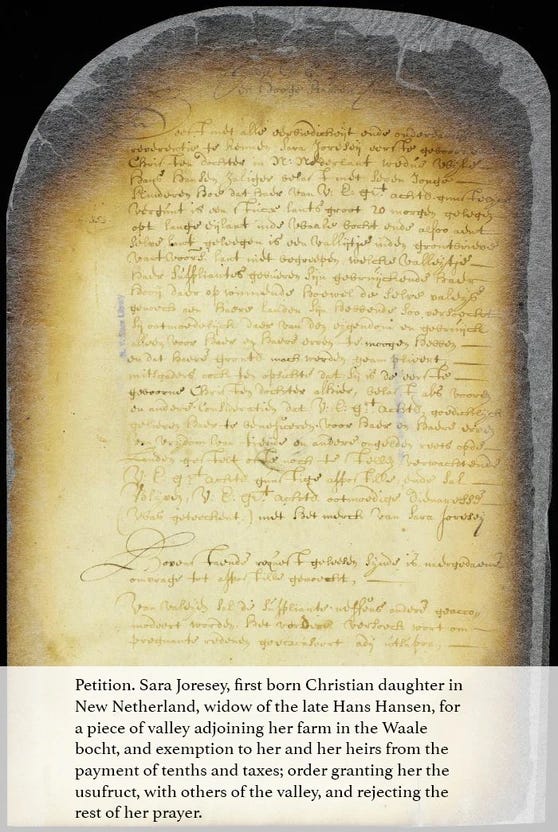
The Dutch kept very good records and historians (and writers like me) are incredibly lucky they have survived 400 years. After the English takeover, the Dutch records were tucked away and not considered all that interesting for a very long time.
In 1911, there was a fire in the records office in Albany, NY. Hundreds of thousands of documents burned, but somehow, most of the Dutch documents survived. Some early translations burned in the fire, but it wasn't until 1974, when Charles Gehring took on translating these records from Dutch, that their significance could be fully appreciated. The documents are yellowed with age, some partially burned on the edges, and have lyrically swooping penmanship. Through the translations, the people of New Amsterdam come alive—Sarah and her family members included.
There are cases of everything from slander of character to injury of a goat, petitions for land grants, and land patent agreements with Lenape tribe members. I had a window into who my characters had conflicts with and from petitions, what they desired.
Some of these records turned into central plot points, some informed background info, others didn't make it into my novel, but it was so cool to use these as primary source research material.
Your close attention to detail created an immersive and authentic look at 1600s New Netherlands. You talk about the different languages spoken, like French, Dutch and Norwegian, and food and drink such as doughnuts filled with “brandy-soaked raisins and cherries” and “Kandeel, a celebratory cocktail made with cream, sack wine, eggs, sugar, and spices”.
There are also customs and traditions throughout, like the Shrovetide Parade and Sinterklaus. Could you share a little about your research process for these elements and if any of these historical traditions, cuisines or languages are part of your life today?
The words in different languages sprinkled throughout the novel are there to convey the different origins of everyone. I've always loved learning languages. I studied French and Spanish in school and have learned a little Danish, Icelandic, Portuguese, and I'm currently continuing to learn Dutch.
During my research, I made several dishes from The Sensible Cook: Dutch Foodways in the Old and New World by Peter Rose. The recipes that I continue to cook are sapaen (corn meal porridge), koolsla (coleslaw), and during Christmastime, I make kruidnoten (ginger snap cookies). Many of the Dutch foods are considered American now: coleslaw, doughnuts, waffles, and traditions like Santa Claus. My favorite revelation was why that the United States (a former British colony) doesn't call small baked goods "biscuits" but "cookies." It comes from the Dutch word "koekje."

You really captured a sense of the period and some of its challenges, which was enlightening for someone like me who wasn’t aware of some of these events from America’s history.
You explore key political events and conflicts in the book such as the complex relationship between the settlers and the Native American tribes, the Dutch West India Company and the United Dutch Provinces ceding the colony to the English. Were there any aspects of these conflicts you found most interesting or surprising to write about?
It surprised me that the colonists sent protests to the Hague pushing for representation and freedom of religion—ideas that are mostly attributed to 100 years later during the Revolutionary War and appear in the Bill of Rights. I was also very interested in representing the Indigenous people of the area, broadly called the Lenape, whose history has been even more obscured than the Dutch or 17th-century women. Kieft's War was particularly difficult to write about. The leadership of the Dutch colony chose reprehensible actions that were disastrous to the Lenape and the colony.
Your poignant cover depicts a 17th-century woman gazing out from a window onto the shores and sea of Dutch Manhattan. As you designed it yourself, can you talk us through how you went about this process and what influenced the final design elements?
I'm lucky to be writing in the period of the Dutch Golden Age with painters including Rembrandt, Vermeer, Judith Leyster, Frans Hals, and Jan Steen. They often painted scenes of ordinary life and were a treasure trove for research. I scoured Wikimedia Commons (a great resource for high-resolution public domain artwork) and found Young Woman at an Open Half Door (1645) by Samuel van Hoogstraten. It's very close to how I imagine Sarah Rapalje at 20 years old! I love her commanding stance, yet her cheeks are flushed and she's giving a side eye, looking out the top of a Dutch split door.
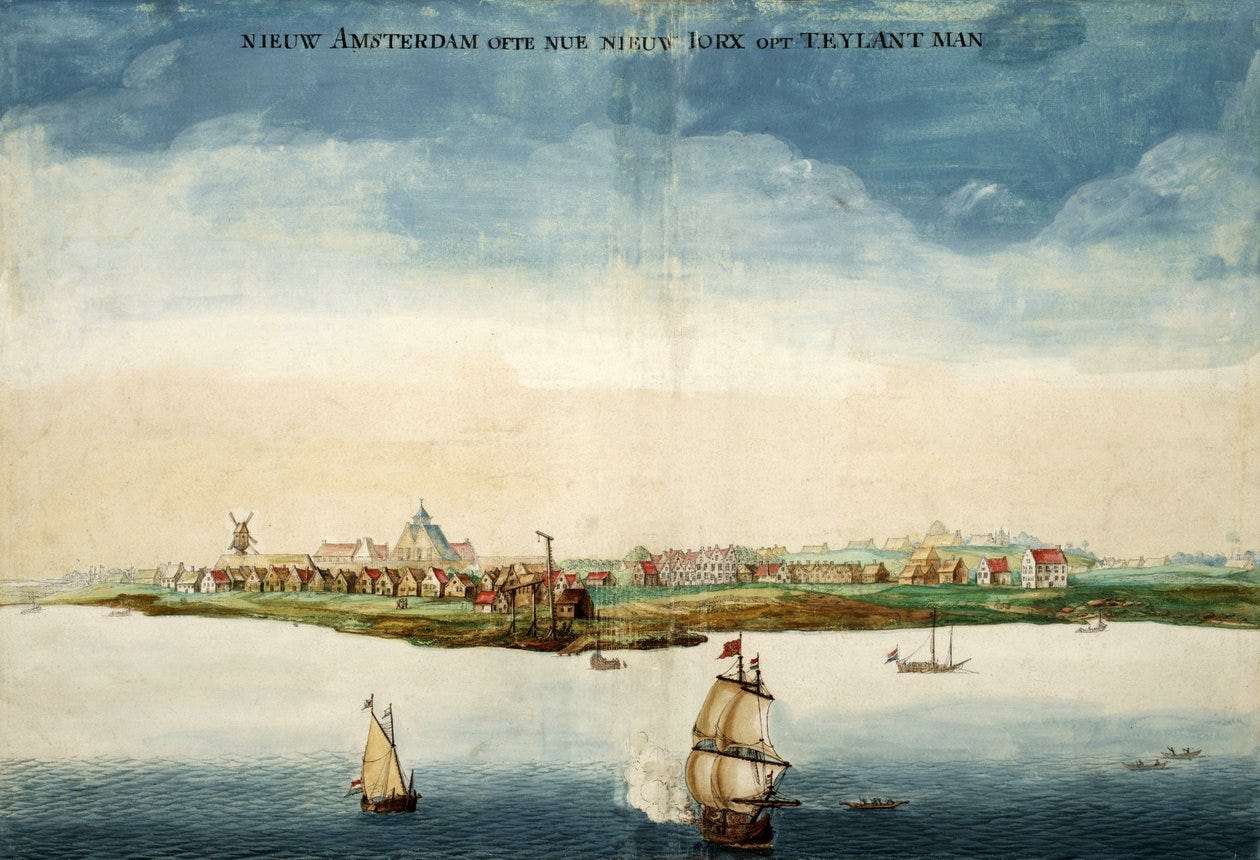
View of New Amsterdam (1664) by Johannes Vingboons is an iconic painting from the period that perfectly captures the setting, so I combined the two images (with a little more editing to make sure the images intermeshed). I love that Sarah is looking over her city, but the look on her face is enigmatic. You can't be quite sure what she is thinking.
Can you recommend some books for readers who want to find out more about New Netherland?
Russell Shorto's books, Island at the Center of the World and Taking Manhattan, are excellent narrative non-fiction about New Netherland (and both feature snippets about Sarah and her family).
Catalyntje Trico: A Life in New Amsterdam by Lana W. Holden is historical fiction about Sarah's mother.
I have blog posts with more fiction and non-fiction recommendations, as well as a full bibliography, on my website, www.fawnbrokawdoyle.com.


Do you have any advice for aspiring authors wanting to tell their own historical stories?
Write a first draft with all the passion that excites you about the history and don't stop to self-edit.
Work toward completing the first draft with the spark that excited you to write as your north star, even if you don't have everything figured out.
The magic is in the editing and it's much harder to edit a blank page. Avoid the research rabbit holes that lure you away from writing by tagging a note to look things up later, like "insert period appropriate meal here" or "insert whatever kind of boats they used in the 17th century."
Having critique partners, beta readers, and editors will help tremendously, both in improving your story and to stop writing from being a lonely venture assailed by self-doubt.
Connecting with fellow authors, readers, and history aficionados has been the most rewarding part of my publishing journey—that includes you, Maddy!
Thank you for your interest in my novel and all your thoughtful questions.